

Benefits of Single Origin Coffee Beans: 2026 Guide
Table of Contents
- What Is Single Origin Coffee?
- Single-Origin Coffee vs Blend: Key Differences
- Core Benefits of Single Origin Coffee Beans
- Single-Origin Coffee Flavor Profiles by Region
- How Roast Level and Processing Shape Origin Character
- How to Choose Single-Origin Coffee Beans
- Brewing Single-Origin Beans to Taste Their Best
- Trade-Offs and Limitations of Single-Origin Coffee
- Frequently Asked Questions
Last Updated: October 12, 2026
What Is Single Origin Coffee?
Single origin coffee is coffee traced to one specific place of production, whether that is a single farm, a cooperative, a region, or a country. The term describes provenance, not a flavor guarantee, and the narrower the trace, the more the cup reflects one set of growing conditions.

That definition matters because the phrase gets used loosely. Some bags say "single origin" and mean a whole country. Others name a farm and a specific plot on it. Both can be excellent, but they tell you different things about what is in the bag.
At God's Country Coffee Co., we source beans from trusted farms around the world and roast them to order, ensuring every cup delivers maximum flavor, aroma, and a smooth, rich experience.
Farm, Cooperative, Regional, and Country Levels
Traceability in single origin coffee operates on four levels, and knowing which one you are buying changes how much consistency to expect.
- Single farm: Beans from one estate, such as Fazenda Santa Barbara in Brazil. Narrowest trace, most vintage-like variation between harvests.
- Cooperative: Beans pooled from many smallholders, like the growers behind our Peru lot from the Norandino cooperative in Piura. More volume, still one defined source.
- Region: Beans from one growing area, such as the Sidama Zone in Ethiopia or Nyeri County in Kenya. Regional character without a single-estate price tag.
- Country: Beans from one nation, blended across regions. The broadest use of the term and the least specific.
Single-Origin Coffee vs Blend: Key Differences
A blend combines coffees from multiple origins to hit a consistent target flavor, while a single-origin coffee lets one place speak for itself. Blends are built for balance and repeatability. Single origins are bought for character.
The practical difference shows up in two places: consistency and control. A blend tastes the same in March and September because the roaster adjusts the recipe as crops change. A single origin shifts with each harvest, which is either the whole point or a dealbreaker, depending on what you want from your morning cup.
Most blends are also designed to perform across brew methods. A single origin often has one method where it sings and others where it merely works.
Core Benefits of Single Origin Coffee Beans
The benefits of single origin coffee beans come down to three things: you can trace where the coffee came from, you taste the growing conditions rather than a roaster's recipe, and you can build a repeat purchase around a specific farm or region you trust.
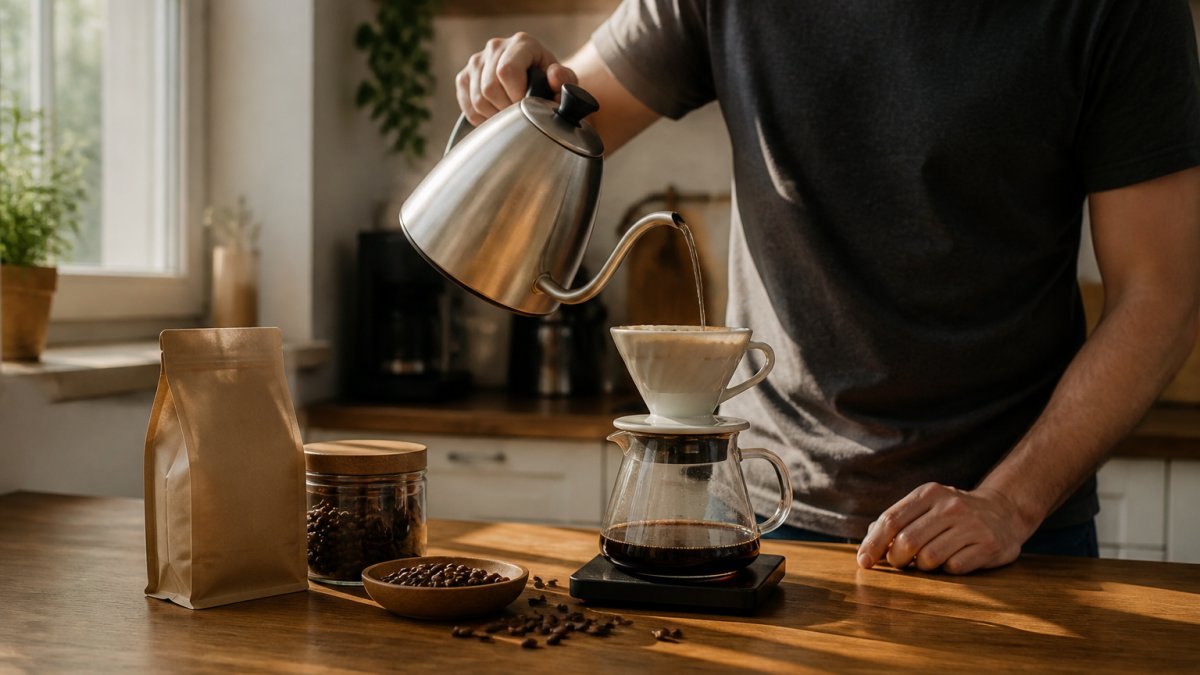
Traceability is the benefit that gets undersold. When a bag names a farm and a processing method, a bad cup has an explanation and a good cup has a repeatable cause.
Traceability and Sourcing Transparency
Transparency in coffee means the label tells you who grew the beans, where, and how they were processed. That information lets you judge value for yourself instead of trusting a marketing line.
Look for a grower name, a region, an altitude range, a variety, and a process on the bag. Our Kenya lot, for example, lists Othaya, Nyeri County, 1,700-1,890 M, SL28, SL34, Ruiru 11, and Batian varieties, and a fully washed process. That level of detail is what separates a genuine single origin from a country-level blend wearing the same words.

Single-Origin Coffee Flavor Profiles by Region
Flavor profiles in single origin coffee track geography closely enough that you can shop by region once you know your preferences. Growing conditions, variety, and processing all leave fingerprints, and the region is the broadest of those signals.
Here is how the major origins typically present:
| Region | Typical Flavor Profile | Signature Character |
|---|---|---|
| Ethiopia | Milk chocolate, fruity, caramel | Floral and berry-forward |
| Kenya | Orange, lemon, floral | Bright acidity, effervescent |
| Colombia | Dried orange, berry, chocolate | Balanced, rounded sweetness |
| Brazil | Cocoa, smooth body | Nutty, low acidity |
| Costa Rica | Sweet apple, raisin, honey | Clean, honeyed sweetness |
| Peru | Salted caramel, citrus | Silky, sweet, gentle |
Central and South American coffees generally land on caramel, citrus, and chocolate notes with moderate acidity. East African coffees, particularly Ethiopian and Kenyan lots, push toward florals, stone fruit, and a brighter acidity that stands out in lighter roasts.
But region alone does not determine flavor. Processing method and coffee variety interact with terroir to shape what you taste.
To use these profiles when buying, look for coffees that match your preferred taste. For brewing, lighter roasts with delicate floral notes shine in pour-over, while fuller-bodied coffees from Brazil or Peru work well in French press or espresso.
How Growing Region and Terroir Affect Flavor
Terroir in coffee is the combined effect of altitude, soil, rainfall, temperature, and shade on how a plant develops its fruit.
Variety compounds it.
Processing method is the third pillar. Washed coffees emphasize clarity and acidity; natural coffees bring fruit-forward sweetness and heavier body; honey and pulped natural processes fall in between. When you see a flavor note on a bag, it often reflects the combination of region, variety, and process, not just the country of origin.
Understanding these interactions helps you evaluate labels more accurately. A coffee labeled "Ethiopia" could taste like jasmine and lemon or like blueberry jam, depending on whether it was washed or natural. That is why specific origin information, farm, cooperative, or region, plus processing details gives you a better idea of what to expect.
How Roast Level and Processing Shape Origin Character
Processing and roast level decide how much origin character survives to your cup. A washed process strips fruit from the bean and highlights acidity and clarity. A natural process leaves the fruit on during drying and pushes sweetness and berry notes forward.
Single Origin Favorites Sample Pack →
Our Ethiopia Natural is a useful illustration: a full natural process, sorted by hand and dried on raised beds, roasted medium-light, with a tasting profile of milk chocolate, fruity, and caramel.

Roast level is the second lever. Light and medium-light roasts preserve acidity, florals, and the specific notes that make an origin recognizable. Dark roasts trade that detail for caramelized, bittersweet flavors that taste more like the roast than the place.
How to Choose Single-Origin Coffee Beans
Choosing well comes down to four checks: roast date, origin specificity, processing method, and whether the flavor profile matches how you actually brew.
Start with the roast date, not the best-before date. A bag roasted to order will arrive fresh. A best-before stamp tells you almost nothing.
Then read the label for specificity. A farm or cooperative name plus a region and a process is a strong signal. A country name alone is the weakest version of the claim.
Checklist for evaluating a bag before you buy:
- Roast date printed, ideally within the last two weeks
- Named farm, cooperative, or growing region
- Processing method stated (washed, natural, pulped natural)
- Variety listed where possible
- Altitude range given
- Tasting notes that match your preferences
- Roasted to order rather than stocked indefinitely
Brewing Single-Origin Beans to Taste Their Best
Brewing to taste origin character means matching your method and grind to the roast level in the bag. Lighter roasts reward methods that show clarity, while darker roasts tolerate immersion brewing and milk better.
For a medium-light Ethiopian or Kenyan lot, pour-over and other filter methods separate the acidity and floral notes cleanly. For medium and medium-dark lots, like a Brazilian or Honduran coffee, drip machines, French press, and espresso all work well because the flavor is broader and less fragile.
Grind size follows the method: coarse for French press, medium for drip and pour-over, fine for espresso. Grind immediately before brewing, since ground coffee loses aromatic compounds within minutes.
Water matters more than most people expect. If your tap water tastes flat or heavily chlorinated, filtered water will improve a good single origin more than any equipment upgrade.
Trade-Offs and Limitations of Single-Origin Coffee
Single origin coffee is not automatically better than a blend, and treating it as a status symbol misses the point. It is a different product with real trade-offs.
The first is consistency. Because a single origin depends on one harvest, the coffee you love this month may taste noticeably different next season. Blends exist precisely to smooth that out. A roaster can adjust a blend recipe as crops change, but a single origin is tied to one farm or region, so vintage variation is unavoidable. For some drinkers, that is the appeal; for others, it is a reason to stick with a blend.
The second is price. Traceable, small-lot coffee costs more to produce and source, and that shows up on the shelf. You are paying for specificity and, in many cases, for a supply chain where the producer is identifiable. But price alone does not guarantee quality.
The third is brewing sensitivity. A blend engineered for balance forgives a sloppy grind or an off ratio. A delicate washed Kenyan lot does not. If you want coffee that tastes good without much thought, a blend is the more honest choice. Single origin coffees often demand more attention to water temperature, grind size, and brew time to shine.
Seasonality is the fourth. Single origins come and go with harvest cycles, so a favorite lot may simply not be available for part of the year. That can be frustrating if you find a coffee you love, but it also means you are drinking coffee at its freshest.
A fifth trade-off is the interaction between processing, variety, and origin. A single origin label does not tell you how the coffee was processed or which variety it is. Two coffees from the same region, one washed Bourbon, one natural SL28, can taste completely different. To truly understand what you are buying, you need to look beyond the origin name to the processing method and variety.
Buy single origin coffee when you want to taste a specific place and are willing to adapt your brewing to it. Buy a blend when you want the same cup every morning with minimal effort. Neither is the more sophisticated choice. And remember: single origin is about provenance, not a guarantee of quality or ethics, always read the label for processing, variety, and sourcing details.
Frequently Asked Questions
What does single-origin coffee mean?
Single-origin coffee comes from one defined place, such as a single farm, a cooperative of smallholders, a region, or a country. That traceability lets you taste the distinct character of a specific growing area rather than a blend. For example, a Kenya single origin from Nyeri County carries bright acidity and citrus notes, while an Ethiopia Natural from Sidama shows fruity, milk chocolate flavors. The narrower the definition, the more specific the flavor story.
Are single-origin coffee beans better than blends?
Neither is objectively better; they serve different purposes. Single-origin coffee highlights a particular farm or region's terroir and is ideal for pour-over or tasting. Blends are built for consistency and balance, which suits espresso or everyday drip. If you enjoy exploring nuanced flavors, single-origin beans offer more variety. If you want the same cup every morning, a blend may be more reliable. Many coffee drinkers keep both on hand.
How do you choose single-origin coffee beans?
Check the label for origin, farm or cooperative, variety, altitude, and processing method. Match the flavor profile to your brew method. Light roasts with bright acidity shine in pour-over; medium or medium-dark roasts work well in drip or espresso. If possible, buy a sample pack to compare regions before committing to a full bag.
Is single-origin coffee healthier than blended coffee?
The health profile of coffee depends mainly on how it is brewed and what you add, not on whether it is single origin or a blend. Both contain similar antioxidants and caffeine. Choose based on taste and freshness rather than health claims.