

Best Espresso Beans for Home Machines: 2026 Picks
Table of Contents
- Quick Comparison: Best Espresso Beans for Home Machines
- How to Choose Espresso Beans for Your Home Setup
- Best Espresso Beans for Beginners
- Espresso Bean Freshness: Why Roast Date Matters More Than You Think
- Best Supermarket Coffee for Espresso vs Roasted-to-Order Beans
- Dialing In Your Beans: Grind Size, Dose, and Troubleshooting
- Conclusion: Finding Your Perfect Espresso Bean
- Frequently Asked Questions
Last Updated: October 9, 2026
Quick Comparison: Best Espresso Beans for Home Machines
The best espresso beans for home machines are freshly roasted, medium to dark roast blends with a roast date you can actually verify. Freshness matters more than origin for most home setups, because stale beans channel and gush no matter how good your grinder is. This guide from God's Country Coffee Co. breaks down what to buy, what to skip, and how to dial it in.
Here is the short version before we get into detail.
| Pick | Roast | Best For | Price |
|---|---|---|---|
| 6 Bean Blend | Dark | Espresso and milk drinks | $23.99 |
| Italian Roast | Darkest | Bold, traditional shots | $23.99 |
| African Espresso | Medium/Dark | Balanced shots with fruit | $23.99 |
| Latin American Blend | Medium-Dark | Nutty, cocoa-forward cups | $23.99 |
| Blonde | Light | Sweet espresso, milk drinks | $23.99 |
Quick Picks:

- Best Overall: 6 Bean Blend, built for espresso and forgiving on home machines
- Best for Beginners: Latin American Blend, balanced and hard to ruin
- Best Single-Origin: Bali Blue, dark chocolate and molasses notes
How to Choose Espresso Beans for Your Home Setup
Choosing espresso beans comes down to four things: your machine, roast level, freshness, and how forgiving the bean is on your setup. Most guides stop at roast level. That is backwards. The machine on your counter decides which beans will actually work.
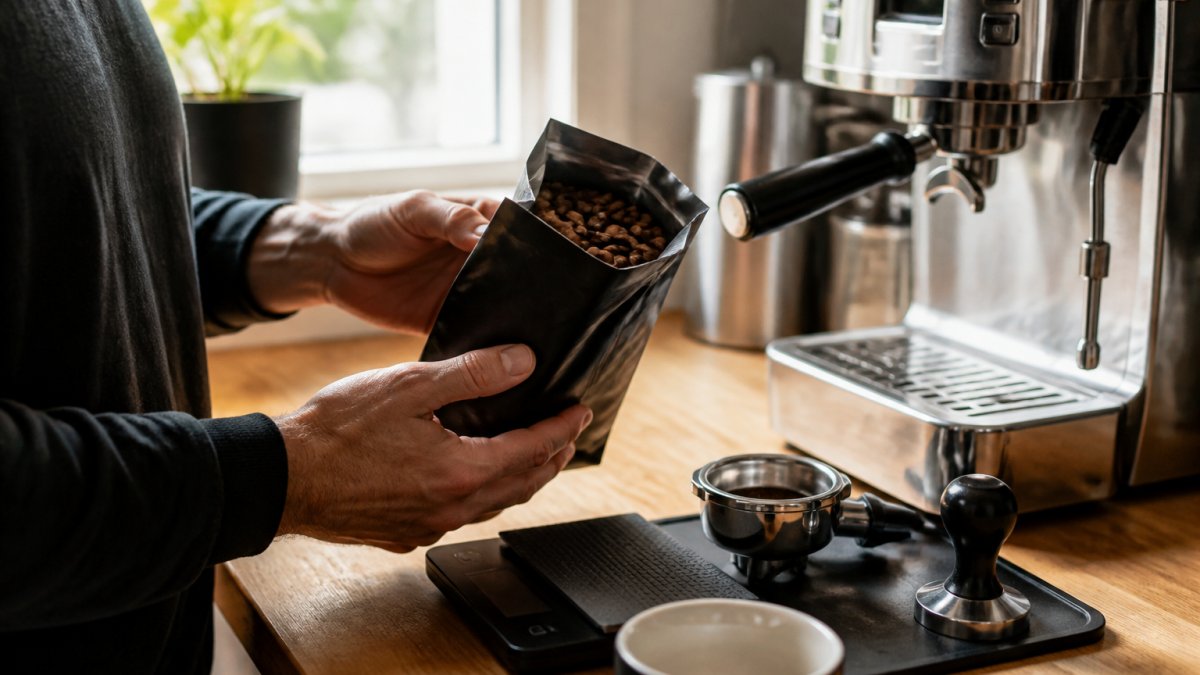
Match the bean to your machine, not the other way around
Entry-level machines (pressurized baskets, ~$100-$300). These machines use a pressurized portafilter that creates fake crema from a small valve. They are forgiving by design, so a medium-dark or dark roast blend with some Robusta works best. A light roast will taste thin and sour because the machine cannot reach the temperature or pressure needed to extract it.
Super-automatic machines (bean-to-cup, ~$500-$2,000). These grind, dose, and tamp internally, so you cannot adjust much. They reward medium roasts with low oil content. Very dark, oily beans clog the grinder and leave residue in the brew unit. Very light beans stall the built-in grinder.
Prosumer setups (58mm portafilter, PID, ~$700+). Here you can extract almost anything, including light roasts, because you control temperature, pressure, and pre-infusion. This is the only category where a light-roast single origin makes sense.
The four-variable decision order
- Machine first. It sets the ceiling on what you can extract.
- Roast level second. Darker roasts extract more easily and hide small mistakes; lighter roasts reward precision.
- Roast date third. A bag roasted three weeks ago will taste flat regardless of origin.
- Flavor profile last. Once the first three are right, pick the taste you want.
A common mistake is buying beans based on origin alone. Origin tells you about flavor. Roast level and freshness tell you whether the bean will actually pull a decent shot on the machine sitting on your counter.
At God's Country Coffee Co., we roast to order, so the bag you open was roasted close to the day it shipped. That single detail changes how a bean behaves in the basket.
Best Espresso Beans for Beginners
The best espresso beans for beginners are medium to medium-dark blends that forgive small errors in grind and dose. Beginners should avoid very light roasts, which punish uneven technique.
Latin American Blend is our top pick for new home baristas. It is a medium-dark roast with nutty hints, mild fruity tones, and a gentle cocoa aftertaste.
Brazil Santos is the other strong starting point. This medium roast is elegant and smooth with cocoa notes, grown by Fazenda Santa Barbara and other farms across Parana and Sao Paulo.
Blonde suits anyone who wants a sweeter shot. This blend from Central America and Africa pulls a sweet espresso that works well as a base for cappuccino and latte.
What most guides miss is that beginners rarely fail because of the bean. They fail because they change three variables at once.
Espresso Bean Freshness: Why Roast Date Matters More Than You Think
Roast date is the single most useful number on a coffee bag. Espresso bean freshness determines how much crema you get, how easily the shot extracts, and how sweet the final cup tastes.
Whole beans start losing aroma within days of roasting. They do not spoil, but they flatten. A bean roasted two months ago will still make coffee, just not the coffee you paid for.
This is where supermarket bags struggle. Most carry a "best by" date, not a roast date. That tells you when the bag expires, not when it was roasted.
Roasted-to-order beans flip that. The bag is roasted after you order, so the clock starts when it reaches you.
Storage matters just as much. Keep beans in an airtight container, away from light and heat. Do not refrigerate them.
Best Supermarket Coffee for Espresso vs Roasted-to-Order Beans
Supermarket coffee can work for espresso, but the tradeoff is freshness, consistency, and cost per shot, not just sticker price. Roasted-to-order beans cost more per bag and deliver a noticeably better shot, and once you do the math, the gap is smaller than it looks.
The two options differ in four ways:
- Freshness: Supermarket bags sit in warehouses and on shelves for months. Roasted-to-order beans ship days after roasting.
- Transparency: Supermarket bags usually show a best-by date. Roasted-to-order bags show a roast date.
- Consistency: A blend you love today may be a different crop next season. Small roasters adjust and label changes more openly.
- Cost per shot: This is where the comparison gets interesting.
Cost per shot: the number most guides skip
A standard double espresso uses about 18 grams of coffee. A 12-ounce (340 g) bag therefore yields roughly 18 to 19 double shots, depending on dial-in waste. If you waste two or three shots dialing in a new bag, which is normal, plan on about 15 to 16 usable doubles per bag.
At $23.99 per 12-ounce bag, that works out to roughly $1.50 per double shot before dial-in waste, or about $1.60 once you account for the shots you pour down the sink.
The real comparison is not $23.99 vs $10. It is cost per good shot. Roasted-to-order beans usually win that math, and they win it by a wider margin the more you drink.
How to read a bag like a buyer
- Look for a roast date, not a best-by date. A best-by date tells you when the bag expires, not when it was roasted. You could be buying beans roasted six months ago.
- Check the roast level against your machine. Supermarket dark roasts are often oily and stale, which is the worst combination for a super-automatic grinder.
- Buy the smallest bag you will finish in three to four weeks. Freshness beats bulk every time.
- Skip the tub. Pre-ground supermarket coffee is the fastest way to a flat, crema-less shot.
Subscriptions and value
If you are not a home barista type and just want good coffee in the morning, a roasted-to-order subscription removes the thinking. You pick a roast, it arrives fresh, and you brew. Subscriptions typically discount the per-bag price and lock in free or reduced shipping, which narrows the cost-per-shot gap further.
African Espresso is a good middle ground here. This medium-dark blend of Kenyan, Tanzanian, and Ethiopian coffee brings balance and a bit of fruit, and it behaves well in most home machines, including super-automatics that struggle with oily dark roasts.

Dialing In Your Beans: Grind Size, Dose, and Troubleshooting
Dialing in means adjusting your grinder and dose until the shot tastes right.
If the shot runs too fast and tastes sour, grind finer. If it runs too slow and tastes bitter or dry, grind coarser. Change one variable at a time and taste after each adjustment.
Here is a quick troubleshooting table:
| Problem | Likely Cause | Fix |
|---|---|---|
| Sour, thin shot | Under-extracted | Grind finer or raise dose |
| Bitter, harsh shot | Over-extracted | Grind coarser or lower dose |
| Gushing, no crema | Stale beans or coarse grind | Check roast date, grind finer |
| Choked machine | Grind too fine | Grind coarser, check basket |
| Inconsistent shots | Uneven tamp or old beans | Level the puck, use fresh beans |
6 Bean Blend is our house blend and the one we would hand a home barista who wants a dark roast built for espresso.
For a bolder, more traditional shot, Italian Roast is our darkest roast, a slow-roasted blend of specialty-grade Arabica and Robusta. Robusta adds body and crema, which many home machines benefit from.

Cowboy Blend sits between the two with cocoa, caramel, and vanilla tones from its dark and medium roast combination.
Conclusion: Finding Your Perfect Espresso Bean
The hardest part of home espresso is not the machine. It is committing to one fresh bean long enough to learn it. Switching bags every week resets your progress and hides what your setup can actually do.
God's Country Coffee Co. roasts to order so your beans arrive fresh, not months old. We source carefully from trusted farms, offer blends and single origins across every roast level, and deliver fast so the flavor and aroma are intact when you open the bag. Whether you want a forgiving starter blend or a bold Italian roast, there is a bag here for your machine.
Find your perfect roast and pull a better shot this week.
Frequently Asked Questions
What is the 30-second rule for espresso?
The 30-second rule refers to the ideal extraction time for a standard espresso shot. When you pull a shot, you want roughly 25-30 seconds from the moment the pump starts until you have about 30ml of espresso in your cup. If it runs faster, your grind is too coarse; if it runs slower, your grind is too fine. This timing helps you dial in your espresso beans for consistent flavor.
Are dark or medium roast beans better for espresso?
Both work well, but they produce different results. Dark roasts like God's Country Coffee Co.'s Italian Roast or 6 Bean Blend give you bold, chocolatey notes with less acidity and a heavier body, which pairs well with milk drinks. Medium roasts like Brazil Santos offer more balance and sweetness. If you drink straight espresso, try a medium roast first. For cappuccinos and lattes, a dark roast holds its flavor better against milk.
Should you use whole beans or pre-ground coffee in a home espresso machine?
Whole beans are strongly recommended for home espresso machines. Pre-ground coffee loses aroma and oils quickly after grinding, often within days. Whole beans stay fresh for weeks when stored properly. You will also need a burr grinder to adjust grind size for dialing in your shots. Without fresh-ground coffee, even the best espresso beans for home machines will taste flat.
How fresh should espresso beans be?
Espresso beans are best used between 5 and 21 days after the roast date. During the first few days, beans release carbon dioxide, which can make extraction uneven. After about three weeks, flavor starts to fade. Check for a printed roast date on the bag, not just a best-by date. God's Country Coffee Co. roasts to order, so your beans arrive close to peak freshness for espresso brewing.
Can you use any coffee beans in an espresso machine?
Technically yes, but results vary. Espresso brewing forces water through finely ground coffee at high pressure, so beans roasted specifically for espresso tend to perform better. Look for beans labeled as espresso blends or those with tasting notes like chocolate, caramel, or fruit. Single-origin coffees can work too, especially medium roasts like Bali Blue or Peru, but they may need more dialing in to get balanced shots.