

Roast-to-Order Alternatives for Small-Batch Coffee
Table of Contents
- What Makes Roast-to-Order Coffee Different
- Small-Batch Coffee Roasters: Why Batch Size Matters
- Fresh Roasted Coffee Beans Online: Freshness Windows and Delivery
- Roast Profiles and Single-Origin vs Blends
- Coffee Subscription Services: Flexibility and Customization
- Sourcing Transparency: Farm-to-Cup and Direct Sourcing
- Pricing, Minimums, and When Roast-to-Order Alternatives Make Sense
- Conclusion
- Frequently Asked Questions
Last Updated: October 17, 2026
What Makes Roast-to-Order Coffee Different
Roast-to-order coffee means roasters roast individual batches after you order, rather than in bulk weeks or months ahead.
At God's Country Coffee Co., your beans are roasted specifically for your order, then shipped within days, noticeably brighter and more nuanced than beans roasted months ago.
The core appeal is freshness. Coffee begins losing optimal flavor within weeks of roasting as volatile aromatic compounds dissipate and oils degrade (Changes in sensory quality characteristics of coffee during storage).
Freshness alone doesn't explain the appeal: roast-to-order roasters typically source from smaller farms, focus on single-origin coffees, and maintain tighter roasting control, compounding the advantage.
Small-Batch Coffee Roasters: Why Batch Size Matters
Small-batch roasting means working with smaller quantities of green coffee per roast cycle, typically 5 to 25 pounds depending on equipment.
Batch size matters for heat distribution.
Small-batch roasters also stay flexible: if an origin isn't performing as expected, they can adjust the next batch.
For home brewers, small-batch sourcing has practical advantages: you're not committing to 5 pounds of one origin if you want variety. Many small-batch roasters, including God's Country Coffee Co., offer sample packs like our Single Origin Favorites Sample Pack at $24.99, letting you explore six origins in 2-ounce portions before buying full bags.

The trade-off is price: small-batch roasting requires more labor and attention per pound than industrial roasting.
Fresh Roasted Coffee Beans Online: Freshness Windows and Delivery
The freshness window for roasted coffee is real but often misunderstood. Coffee isn't perishable, but its flavor shifts over time.
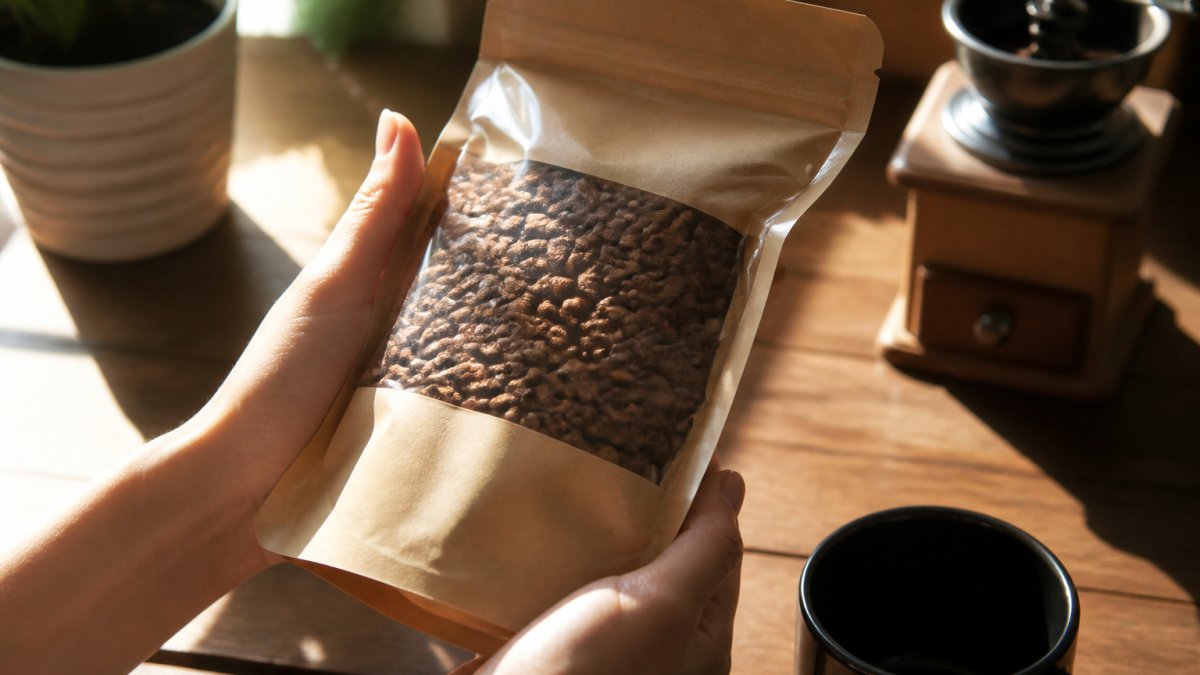
When you order roast-to-order coffee online, the roast date becomes transparent.
Shipping speed also influences freshness. Beans shipped via ground mail spend 3-7 days in transit, continuing to degas and oxidize slightly.
For most home brewers, beans arrive at their peak flavor window.
Roast Profiles and Single-Origin vs Blends
Roast profile describes how long and at what temperature a roaster develops the beans. Light roasts preserve the origin's unique characteristics. Medium roasts balance origin flavor with roasted notes.
Neither is objectively superior; preference depends on what you want from your coffee.
Single-origin coffees come from one farm or region; blends combine beans from multiple origins. Single-origin beans let you taste the specific place where your coffee grew. Ethiopia Natural, one of our offerings at $23.99, showcases the fruity, chocolate-forward character of the Sidama zone.

Blends are intentionally designed: a bright, acidic bean combined with a smooth, chocolatey one creates a balanced cup.
Offering both makes sense: single-origins appeal to curious drinkers exploring regions, while blends serve people who know their preferred profile and want consistency. Our Best Sellers Sample Pack at $24.99 includes both: single-origin Peru and Mexico alongside house blends like 6Bean and Cowboy.

Coffee Subscription Services: Flexibility and Customization
For someone choosing an alternative to Roasttoorder, the useful question is whether the subscription model fits how you actually consume coffee, and whether it supports small-volume business supply. The mechanics that matter: frequency control, pause and skip, origin and roast-level customization, and the difference between a consumer subscription and a wholesale standing order.
The four subscription mechanics that actually matter
A subscription is only as good as its flexibility controls. Four mechanics separate a useful subscription from a lock-in:
- Frequency control. Can you set delivery to every 1, 2, 4, or 8 weeks, or is it fixed monthly? Coffee consumption varies by household; a fixed cadence usually means either running out or stockpiling stale beans.
- Pause and skip. Can you skip a delivery or pause indefinitely without emailing support? The best services expose this in the account dashboard.
- Origin and roast-level customization. Can you choose a specific origin, a roast level, or a rotating selection, or are you locked to one SKU? Rotating selections suit explorers; locked SKUs suit drinkers who found their favorite.
- Grind and bag-size options. Whole bean vs. ground, and 12-ounce vs. larger bags, change both the per-cup cost and the freshness math.
A common pattern is a rotating "roaster's choice" subscription alongside a build-your-own option: the rotating model gives the roaster scheduling predictability, the build-your-own model gives the customer control, and the best services let you switch between them.
Subscription vs. one-off ordering: the freshness math
Roast-to-order subscriptions have one structural advantage over one-off ordering: the roaster knows your cadence and can schedule the roast to your ship date rather than roasting into inventory. Subscription beans typically arrive closer to the roast date than one-off beans from a roaster who batches shipments weekly.
The trade-off is commitment. A subscription requiring a minimum number of deliveries before cancellation is effectively a prepaid bundle.
A subscription discount is only a saving if you actually drink the coffee before it goes stale. If a delivery cadence outpaces your consumption, the effective cost per cup rises even when the per-bag price falls.
Business and wholesale suitability
Consumer subscriptions and business supply are different products. For cafes, offices, and small brands, the relevant questions are:
Single Origin Favorites Sample Pack →
- Repeatable small-volume supply. Can the roaster deliver a consistent roast profile at small batch on a predictable schedule, or does quality drift between batches?
- Standing orders vs. subscriptions. A wholesale standing order is usually invoiced and delivered on a business cadence, not a consumer subscription cadence. Ask which model the roaster uses.
- Customization and private label. Can the roaster develop a custom roast profile, apply your branding, or supply white-label bags? This is the difference between buying coffee and building a product.
God's Country Coffee Co. is built around small-batch, roast-to-order production: order individual bags or sample packs on your own cadence. For recurring supply, set your own reorder rhythm around the 2-4 week peak drinking window rather than committing to a fixed subscription before confirming the roast suits your brewing method.
How to evaluate a subscription in 10 minutes
A quick checklist for any roast-to-order subscription alternative:
- Is the roast date printed on the bag, and is dispatch within 1-3 business days of roast?
- Can you pause or skip in the account dashboard without contacting support?
- Can you change origin, roast level, grind, and bag size?
If a service passes the first three checks with no onerous commitment, it's a reasonable fit for a home drinker. If it fails the roast-date or dispatch check, the convenience isn't worth the freshness trade-off. For business buyers, the wholesale questions matter more than consumer subscription mechanics.
Sourcing Transparency: Farm-to-Cup and Direct Sourcing
Transparency in coffee sourcing has become standard among specialty roasters, but depth varies. Some name the farm or cooperative; others provide altitude, processing method, and farmer details.
Direct sourcing means the roaster has a direct relationship with the farm or cooperative rather than buying through middlemen.
Our sourcing reflects this commitment. The Peru we offer comes from Cooperativa Agricola de Servicios Norandino in Piura, Amazonas.
Pricing, Minimums, and When Roast-to-Order Alternatives Make Sense
"Roast-to-order costs more than grocery coffee" is true but not useful for someone actually choosing an alternative. The decision hinges on four variables: per-bag price, minimum order quantity, shipping cost and threshold, and whether the service supports how you actually buy coffee (one-off, subscription, or wholesale).
Per-bag pricing and what the premium buys
At God's Country Coffee Co., single-origin bags are $23.99 and sample packs $24.99 for six 2-ounce portions, the realistic range for small-batch, roast-to-order specialty coffee: roughly $18-$26 per 12-ounce bag depending on origin and processing. Grocery specialty coffee often sits at $8-$12 per bag, but the comparison isn't apples-to-apples. The premium covers four cost drivers commodity coffee avoids:
- Labor per pound. Small-batch roasting (typically 5-25 lb per cycle) requires more operator attention per pound than industrial drum roasting.
- Green coffee cost. Direct and relationship sourcing usually costs more than commodity purchasing.
- Turnover. Roasting after the order means less inventory buffer and less economy of scale.
Small-batch roasters often price sample packs near the cost of a single full bag so new customers can test origins without committing, which is why a six-origin sample pack at $24.99 is a rational entry point, not a discount gimmick.
Minimum order quantities and order flexibility
Minimums are where alternatives diverge most. Three common models exist:
- No minimum, single-bag orders. You can buy one 12-ounce bag of any origin. This is the most flexible model and the best fit for home drinkers who want variety.
- Sample-pack minimum. The smallest order is a curated multi-origin pack. Good for exploration, less good if you already know what you want.
- Subscription or wholesale minimum. Recurring volume or a case minimum is required. Common for cafes and offices, restrictive for home buyers.
God's Country Coffee Co. follows the first model: individual bags and sample packs, no case minimum, no subscription lock-in. That matters because the most common complaint about roast-to-order services is being forced into recurring orders or multi-bag commitments before knowing whether the roast suits your brewing method.
Shipping cost, thresholds, and delivery regions
Shipping is the hidden line item that changes effective per-cup price. Three questions decide it:
- Is there a free-shipping threshold? Many small roasters set one (commonly in the $35-$50 range) so a single bag ships paid but two bags ship free. If you drink one bag every two weeks, batching two bags per order is usually cheaper than two separate orders.
- Which regions are served? Domestic-only roasters ship faster and cheaper; international shipping adds customs and transit time that erodes the freshness advantage.
- What is the dispatch window? A roaster that roasts and ships within 1-2 business days preserves more of the peak flavor window than one that batches shipments weekly.
Before comparing per-bag prices across alternatives, calculate the effective cost per 12-ounce bag including shipping. A $22 bag with $8 shipping is more expensive than a $24 bag with free shipping over the threshold.
Roast date, dispatch, and delivery freshness
The freshness advantage only holds if the timeline is tight. A practical benchmark:
- Roast date printed on the bag, non-negotiable; if a service hides it, treat that as a red flag.
- Dispatch within 1-3 business days of roast, the standard most small roasters aim for.
- Transit of 2-5 days domestic, ground shipping is normal; faster service preserves more aromatics.
God's Country Coffee Co. roasts to order and prioritizes rapid dispatch so beans arrive inside that peak window.
Decision framework by buyer type
The right alternative depends on who you are, not just on price:
| Buyer type | What matters most | Best-fit model |
|---|---|---|
| Home drinker exploring origins | No minimum, sample packs, printed roast date | No-minimum single-bag or sample-pack roaster |
| Home drinker with a fixed favorite | Consistent roast profile, subscription flexibility, free-shipping threshold | Subscription with pause/skip and origin lock |
| Gift buyer | Curated multi-origin packs, presentable packaging, ship-by date | Sample packs and gift sets |
| Cafe or office | Repeatable small-volume supply, wholesale pricing, dispatch reliability | Wholesale program with standing order |
| Small brand or private label | Custom roast profiles, batch consistency, labeling options | Private-label or white-label roaster |
For home drinkers, the test is simple: can you order one bag, see the roast date, and get it shipped within days? For cafes and businesses: can the roaster hit a repeatable profile at small volume on a predictable schedule? Those are different products, and a service excellent for one buyer type may be a poor fit for the other.
When roast-to-order alternatives make sense
Roast-to-order makes sense when freshness, sourcing transparency, and flavor complexity matter more than per-bag cost, and when minimums and shipping terms match your buying pattern. It makes less sense if you drink casually, need the lowest per-cup cost, or require wholesale volume the roaster can't supply at small batch. The premium is justified for regular specialty drinkers and poorly justified for occasional ones, and minimums and shipping terms, not sticker price, usually decide which alternative is actually cheaper.
Conclusion
Choosing a roast-to-order alternative for small-batch coffee comes down to what matters to you. If maximum freshness, transparent sourcing, and distinct flavor profiles appeal, roast-to-order roasters deliver on all three fronts.
God's Country Coffee Co. specializes in roasting to order, ensuring every shipment arrives at peak freshness. Whether you want single-origin coffees like our Ethiopia Natural or a curated blend like Kopi Safari, we roast your order fresh and ship it fast. Find Your Perfect Roast and experience the difference freshness makes.
Find Your Perfect Roast with God's Country Coffee Co. Experience coffee roasted specifically for your order, sourced from trusted farms worldwide, and shipped fresh within days. Start with our Single Origin Favorites Sample Pack and discover why freshness matters.
Frequently Asked Questions
What are the best roast-to-order alternatives for small-batch coffee?
The best alternatives depend on your priorities: freshness, sourcing transparency, roast profiles, and subscription flexibility. God's Country Coffee Co. specializes in roast-to-order delivery with single-origin and blended options, starting at $23.99 per bag. Sample packs like the Single Origin Favorites ($24.99) let you explore six different origins and roast profiles before committing to full-size purchases. Other alternatives vary in batch sizes, roast date visibility, and how quickly they ship after roasting.
How do small-batch coffee roasters ensure freshness compared to commercial roasting?
Small-batch roasters roast in smaller quantities, typically 5 to 25 pounds depending on equipment, compared to commercial operations running 100+ pounds. Smaller batches allow precise temperature control and shorter roasting times, which preserve delicate flavor notes and aroma. Fresh roasted coffee peaks in flavor 3-10 days after roasting. Roast-to-order services ship immediately after roasting, so beans arrive at peak freshness. Always check the roast date on the bag and brew within 2-3 weeks for optimal flavor.
Are coffee subscription services worth the cost compared to grocery store coffee?
Yes, if freshness and flavor matter to you. Grocery store coffee is often roasted weeks or months before purchase, losing aroma and complexity. Roast-to-order services deliver beans roasted days before arrival, preserving maximum flavor and aroma. Single-origin coffees showcase the grower's work and terroir (altitude, soil, processing method), offering flavor profiles you won't find in blended supermarket options. At $23.99-$24.99 per bag from God's Country Coffee Co., the cost reflects small-batch roasting, direct sourcing, and freshness, not bulk commodity pricing.
How can I tell when coffee beans were roasted?
Check the roast date printed on the bag. Roast-to-order services always display this clearly because freshness is their selling point. Beans are best 3-10 days after roasting (optimal flavor extraction) and remain good up to 3 weeks if stored properly in an airtight container away from heat and light. If a bag has no roast date, it's likely been sitting in inventory for weeks or months. God's Country Coffee Co. roasts to order, so your roast date reflects when your beans are prepared for shipment.