

Why Freshly Roasted Coffee Is Better: A 2026 Guide
Table of Contents
- Why Freshly Roasted Coffee Tastes Better Than Store-Bought Beans
- How to Tell If Coffee Beans Are Fresh
- How Long Coffee Beans Stay Fresh After Roasting
- The Best Time to Brew Coffee After Roasting
- How to Store Coffee Beans to Keep Them Fresh
- Freshly Roasted Whole Beans vs Pre-Ground Coffee
- Does Freshly Roasted Coffee Have Health Benefits?
- Conclusion
- Frequently Asked Questions
Last Updated: October 21, 2026
Why Freshly Roasted Coffee Tastes Better Than Store-Bought Beans
Freshly roasted coffee is better because roast date, not price or packaging, is the biggest variable between a flat cup and a vivid one. At God's Country Coffee Co., we roast to order for exactly this reason: the gap between a two-week-old bag and a two-day-old bag is the difference between cocoa and cardboard.
Most guides treat "fresh" as a marketing word. It isn't: freshness is a measurable decline in aromatic compounds driven by oxygen, moisture, heat, and light. Once you understand the timeline, every other decision gets easier.
What Freshly Roasted Actually Means
Freshly roasted coffee is coffee that was roasted within roughly the past two to four weeks and has been stored away from oxygen, moisture, heat, and light. It is defined by a roast date, not a best-by date.
That definition matters because "fresh" is a window, not a moment. The Specialty Coffee Association's guidance on coffee freshness and storage treats roast date as the starting point for any quality conversation, and we'd argue it's the only honest one.
How Roasting Creates Flavor and Aroma
Roasting is a controlled transformation: heat drives off moisture and triggers reactions, including Maillard reactions, that build hundreds of aromatic compounds behind caramel, cocoa, and toasted notes. Roast level shapes the result: a medium roast like our Peru keeps citrus and salted caramel forward, while a [medium-light Ethiopia Natural](https://godscountrycoffeeco.com/products/ethiopia-natural) leans into milk chocolate, fruit, and caramel.


Those aromatic compounds are volatile, and every day after roasting some of that hard-won aroma leaves the bean.
How to Tell If Coffee Beans Are Fresh
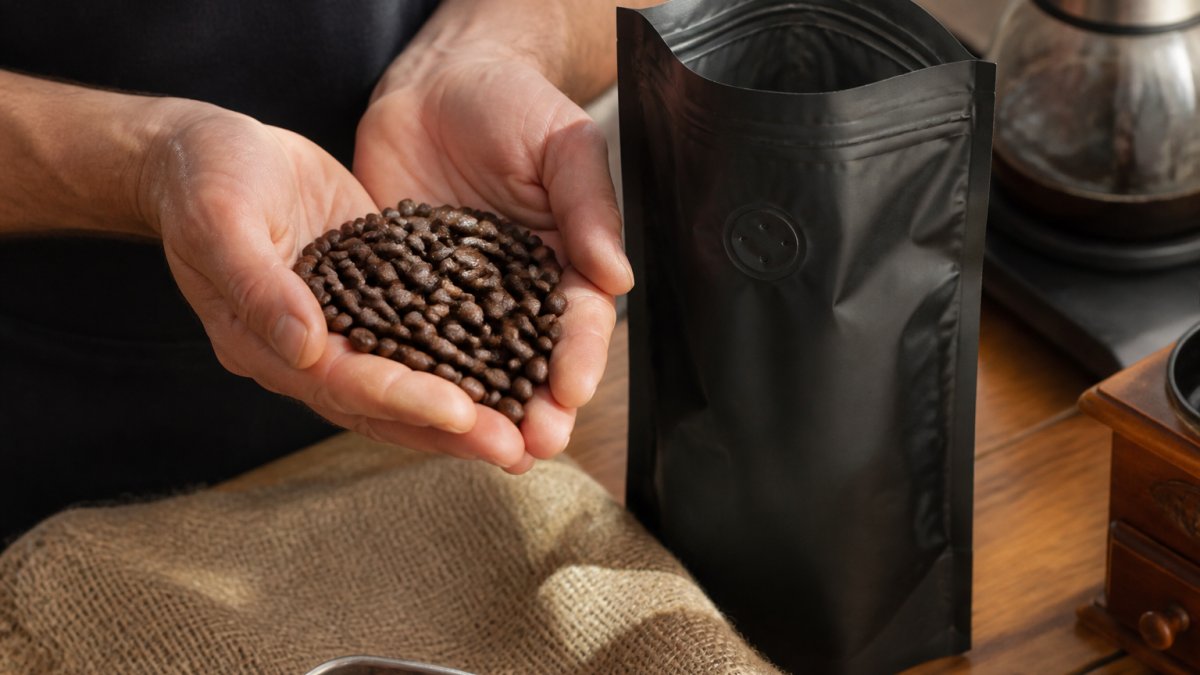
You can tell if coffee beans are fresh by checking four things: a printed roast date within the last few weeks, a one-way degassing valve, a strong aroma on opening, and evenly colored beans with surface oils appropriate to their roast level.
A quick freshness check, in order:
- Roast date: Within two to four weeks is ideal for most brewing.
- The valve: A one-way valve lets carbon dioxide escape without letting oxygen in. Its presence signals a roaster who understands degassing.
- The smell: Fresh beans hit you at the bag. Stale beans smell vaguely like dry cereal.
- The sound: Fresh beans crack softly when you bite one; stale beans are dull and soft.
- The bloom: Pour hot water on fresh grounds and they swell and bubble. No bloom, no gas, no freshness.
A common mistake is judging freshness by the roast level's oil sheen. Darker roasts look oily sooner, and that's about roast profile, not age.
Reading Roast Dates vs Best-Before Dates
The single most useful habit is to look for a roast date, not a best-before date. A roast date tells you when the clock started; a best-before date may be months after roasting and says nothing about peak flavor, so you can't tell four-day-old coffee from four-month-old coffee.
Interpret a roast date against the resting window rather than treating 'fresher' as automatically better: a two-day-old bag may still be gassy, while a twelve-day-old bag may be at its best.
Three At-Home Freshness Tests
You don't need lab equipment. Three tests cover most of it:
- The bloom test: Put a scoop of grounds in a mug or pour-over filter and pour hot water over them. Fresh coffee swells and bubbles as CO2 escapes; a weak or absent bloom suggests older beans or a darker roast that released gas quickly. Compare against a known-fresh bag to calibrate.
- The aroma test: Grind a small amount and smell it immediately. Fresh grounds release a clear, layered aroma. Stale grounds smell flat, dusty, or like cardboard. Because grinding accelerates aroma loss, this test is most informative right after grinding.
- The taste test: Brew the same coffee at two points in its window, such as day four and day ten, using the same recipe. Muddy or sharp early and rounder later means degassing; vivid early and flat later means oxidation. That tells you whether to rest the beans longer or finish the bag faster.
Why Bean Appearance Can Mislead
Oil on the surface of beans is driven mainly by roast level, not age. Dark roasts bring oils to the surface within days, while light roasts may never look oily, so a shiny dark bean isn't necessarily fresher than a matte light bean.
The practical takeaway: buy bags with a printed roast date, note the date when the bag arrives, and taste across the first two weeks to find your own peak.
How Long Coffee Beans Stay Fresh After Roasting
Whole bean coffee stays at its best for roughly two to four weeks after the roast date, holds acceptably for about six to eight weeks in good storage, and declines noticeably beyond that.
This is where most buying decisions go wrong: people buy in bulk to save money, then drink the last third of the bag well past its peak.
The Post-Roast Resting Window and CO2 Degassing
Freshly roasted beans release carbon dioxide for days after roasting. That CO2 is why a bag puffs up and why brewing immediately after roasting can taste sharp or oddly flat: the gas interferes with water contacting the grounds evenly.
During roasting, the reactions that build aromatic compounds also trap CO2 inside the bean's porous structure, and that gas slowly escapes afterward.
Single Origin Favorites Sample Pack →
The ideal window is not one number. It shifts with three variables:
- Roast level: Darker roasts are more porous and degas faster, so they often settle within three to five days. Light roasts hold CO2 longer and may need seven to fourteen days before they taste balanced.
- Bean density and processing: Dense, high-grown beans and washed coffees tend to degas more slowly than softer, natural-process beans. A natural Ethiopia may open up sooner than a washed Peru from the same roast date.
- Brew method: Espresso is the most sensitive because a pressurized shot amplifies any inconsistency in the puck. Pour-over and drip are more forgiving but still reward rested grounds. Immersion methods like French press tolerate a wider range.
A simple way to track this: brew the same coffee on day three, day seven, and day twelve using the same recipe. If day three tastes sharp or foamy and day seven tastes rounder, you've found your resting window; if day twelve tastes flat and papery, you've found the far edge. Most home brewers land on about five to ten days for filter and seven to fourteen for espresso, but the only reliable answer is the one you taste in your own kitchen.
The Best Time to Brew Coffee After Roasting
The best time to brew coffee after roasting is generally three to fourteen days post-roast for most brew methods, with espresso often preferring the longer end of that range. Brew too early and CO2 disrupts extraction; too late and the aromatic compounds have faded.
Matching Freshness to Your Brew Method
Different methods tolerate freshness differently:
| Brew Method | Ideal Rest After Roast | Why It Matters |
|---|---|---|
| Pour-over | 3-10 days | Bloom releases CO2; even saturation matters |
| Espresso | 7-14 days | Residual gas causes channeling and unstable shots |
| French press | 5-12 days | Full immersion is forgiving but still benefits from rest |
| Cold brew | 5-14 days | Long steep extracts steadily; freshness shows in aroma |
| Drip machine | 3-10 days | Fast contact time rewards consistent, rested grounds |
If you're coming from supermarket coffee, expect the first few days of a fresh bag to taste almost aggressive. That's aroma, not a flaw.
How to Store Coffee Beans to Keep Them Fresh
Store coffee beans in an airtight, opaque container at room temperature, away from light and heat, and buy only as much as you'll drink within a few weeks. Oxygen, moisture, heat, and light are the four enemies; the fridge and freezer introduce moisture and odors, so skip both for daily-use bags.
What actually works:
- Airtight and opaque: A sealed canister or the original valve bag, squeezed to remove air.
- Cool and dark: A cupboard beats a sunny countertop every time.
- Whole bean over ground: Grind right before brewing.
This is where roast-to-order matters. Our Single Origin Favorites Sample Pack lets you try six origins in small quantities, so nothing sits in the cupboard going stale while you work through a kilo.

Freshly Roasted Whole Beans vs Pre-Ground Coffee
Freshly roasted whole beans beat pre-ground coffee on aroma, flavor, and shelf life, because grinding exposes the bean's interior to oxygen and accelerates the loss of volatile compounds.
Grind size also matters for extraction: too coarse and water flows through without picking up much; too fine and it over-extracts into bitterness. Freshly roasted whole beans give you control over that variable right up until the moment you brew.
Does Freshly Roasted Coffee Have Health Benefits?
Coffee contains antioxidants and is associated with health outcomes studied in large populations, including a lower risk of type 2 diabetes in observational research. Freshness isn't the driver of those findings, but fresh coffee tastes better, so people drink it as coffee rather than drowning it in sugar and syrup.
We won't overstate it. Coffee is not medicine, and the evidence on health outcomes is observational rather than causal. For general dietary guidance, the CDC's information on coffee and health is a sensible reference point.
Conclusion
The hardest part of drinking better coffee isn't technique, it's the supply chain: getting beans roasted days ago rather than months ago, and finishing them before they fade. Most people never solve that problem, which is why most home coffee tastes the way it does.
At God's Country Coffee Co., we roast to order from carefully sourced beans, so your bag ships close to its roast date rather than sitting in a warehouse.
Frequently Asked Questions
How long after roasting is coffee at its best?
Most coffees hit their peak roughly 5 to 14 days after the roast date. The first 24 to 72 hours are dominated by carbon dioxide degassing, which can make espresso pour unevenly and pour-over beds bloom heavily. After that window, the coffee settles and the aromatic compounds come through more clearly. Medium and light roasts often peak later than dark roasts. Whole beans stay good for about four to six weeks past roast if stored in an airtight container away from light, heat and moisture.
How can you tell if coffee beans are fresh?
Start with the roast date on the bag, not a best-by date. Fresh whole beans look slightly oily or matte depending on roast level, smell sweet and distinct when you open the bag, and feel firm rather than brittle. Grind a small amount and pour hot water over it: fresh coffee blooms and bubbles as CO2 escapes. Stale coffee barely reacts, smells flat or papery, and tastes dull or bitter. If the bag has no roast date, treat the coffee as a gamble.
Should you let coffee rest after roasting before brewing?
Yes, for a few days. CO2 released during roasting keeps escaping for the first several days, and that gas interferes with water contact during extraction. Espresso is the most sensitive: beans under three days old often pull fast, uneven shots with thin crema. Pour-over and drip tolerate fresher beans but still taste more balanced after about four to seven days. If you must brew immediately, grind coarser and expect a livelier, less settled cup.
How should you store freshly roasted coffee beans?
Keep whole beans in an airtight, opaque container at room temperature, away from the stove, sunny windows and the fridge. Oxygen, moisture, heat and light all speed up staling. Buy in amounts you will finish within a few weeks, and grind right before brewing. A bag with a one-way degassing valve works well if you press out excess air. Freezing is an option for larger quantities: portion into sealed bags, freeze, and grind from frozen without thawing first.
Have a question about freshness, storage, or which roast suits your brew method? We're always happy to talk coffee.