

Best Ethically Sourced Coffee Beans 2026
Table of Contents
- What Ethically Sourced Coffee Means and Why It Matters
- Organic vs Non-Organic Coffee Beans: Key Differences
- Ethically Sourced Coffee Certifications to Look For
- How to Choose Ethically Sourced Coffee: What Actually Matters
- Best Organic Fair Trade Coffee Brands and Single-Origin Options
- Transparency, Traceability, and What to Question
- Frequently Asked Questions
Last Updated: October 19, 2026
What Ethically Sourced Coffee Means and Why It Matters
Choosing ethically sourced coffee beans extends far beyond your morning cup. At God's Country Coffee Co., we believe ethical sourcing is the first step toward better coffee choices. Ethically sourced coffee is grown and harvested under conditions prioritizing fair treatment of workers, environmental stewardship, and sustainable agriculture, impacting millions of smallholder farmers and tropical ecosystems worldwide.
The coffee supply chain is long and complex: beans travel from farms in Africa, Latin America, and Asia through multiple intermediaries before reaching your cup. Without transparency, farmers often receive only a fraction of what consumers pay. Ethical sourcing closes this gap through direct relationships, fair compensation, and verifiable working conditions.
Conventional coffee farming contributes significantly to deforestation and water depletion in some of the world's most biodiverse regions. Prioritizing ethically sourced coffee beans supports methods that protect soil health, conserve water, and maintain forest cover, benefiting coffee-growing communities and coffee quality itself.
Organic vs Non-Organic Coffee Beans: Key Differences
The distinction between organic and non-organic coffee beans matters, but it isn't the same as ethical sourcing. Organic certification means beans were grown without synthetic pesticides, herbicides, or fertilizers. Non-organic coffee may still be ethically sourced, the two address different concerns.
Organic coffee farming relies on natural pest management, composting, and crop rotation. These methods require more labor and planning, which is why organic beans often cost more. Organic soil also retains more moisture and biological activity, improving long-term farm productivity (pubmed.ncbi.nlm.nih.gov).
Non-organic coffee can still come from responsible farms using integrated pest management and sustainable practices. The key difference is certification and verification: organic certification requires third-party audits and ongoing compliance documentation. Many ethically sourced coffees are organic, but not all organic coffee is ethically sourced, some large-scale organic operations prioritize profit over fair wages.
The practical choice depends on your priorities. If environmental impact and soil health matter most, organic certification provides measurable assurance. If farmer income and working conditions are your concern, look beyond the organic label to direct trade relationships or Fair Trade certification. God's Country Coffee Co. sources beans from farms emphasizing both organic practices and fair compensation, recognizing these goals reinforce each other.
Ethically Sourced Coffee Certifications to Look For
Several certification standards verify ethical claims in the coffee supply chain. Understanding what each guarantees helps you make informed choices.
Fair Trade certification focuses on farmer income and working conditions. It guarantees a minimum price floor, protecting farmers from market volatility, and requires democratic governance in producer cooperatives while prohibiting exploitative child labor. However, it doesn't address environmental impact as comprehensively as other standards.
Rainforest Alliance certification emphasizes environmental sustainability alongside social responsibility, covering water conservation, biodiversity protection, and worker welfare. Its audits are rigorous, but it's broader and less focused on price guarantees than Fair Trade.
Direct Trade isn't a formal certification but a sourcing philosophy where roasters work directly with farms or cooperatives, bypassing intermediaries. It often means higher prices for farmers and greater transparency, but without third-party verification, claims are harder to verify.
UTZ certification focuses on sustainable farming and supply chain transparency, covering environmental management, worker rights, and community development. It's widely recognized but less strict than some alternatives.
The strongest ethically sourced coffee often combines multiple certifications or verifiable direct relationships. A bean with Fair Trade and Rainforest Alliance certification addresses both farmer income and environmental impact.
| Certification | Primary Focus | Best For | Key Guarantee |
|---|---|---|---|
| Fair Trade | Farmer income | Supporting minimum price floors | Guaranteed base price |
| Rainforest Alliance | Environmental sustainability | Water and biodiversity protection | Third-party audited practices |
| Direct Trade | Transparency and relationships | Higher farmer compensation | Traceable sourcing |
| UTZ | Sustainable farming | Supply chain accountability | Verified practices |
How to Choose Ethically Sourced Coffee: What Actually Matters
Selecting the best ethically sourced coffee beans means moving beyond marketing language and asking specific questions about sourcing, transparency, and traceability.
Start with the origin story. Reputable roasters detail where beans come from, not just the country, but the specific region, altitude, and farm or cooperative.
Look for roast dates, not just purchase dates. Freshness matters for flavor and signals how seriously the roaster takes their craft. Coffee roasted to order or with recent roast dates (within 2-4 weeks) suggests the roaster isn't holding inventory long.
Check for transparency about farmer compensation. Ethical roasters disclose how much of the retail price reaches farmers, sometimes citing farmgate prices or premiums above Fair Trade minimums. If a roaster won't discuss farmer economics, that's a red flag.
Verify certifications independently. Don't just trust the label. Visit the certifying organization's website and search for the farm or cooperative name. This takes two minutes and confirms whether the certification is real.
Consider the roaster's sourcing practices. Do they visit farms regularly, maintain long-term grower relationships, and publish supply chain information? Committed roasters invest in these relationships and share that information openly.
Understand the price-quality relationship. Ethically sourced coffee costs more because farmers receive fair compensation and quality beans command higher prices. A bag priced significantly below competitors may be using lower-quality beans or less transparent sourcing.
Best Organic Fair Trade Coffee Brands and Single-Origin Options
Single Origin Favorites Sample Pack: Six Origins to Explore
The best way to understand the diversity of ethically sourced coffee beans is to taste them side by side. God's Country Coffee Co.'s Single Origin Favorites Sample Pack ($24.99) includes six 2-ounce packs representing different coffee-growing regions, each with distinct flavor profiles and sourcing stories.

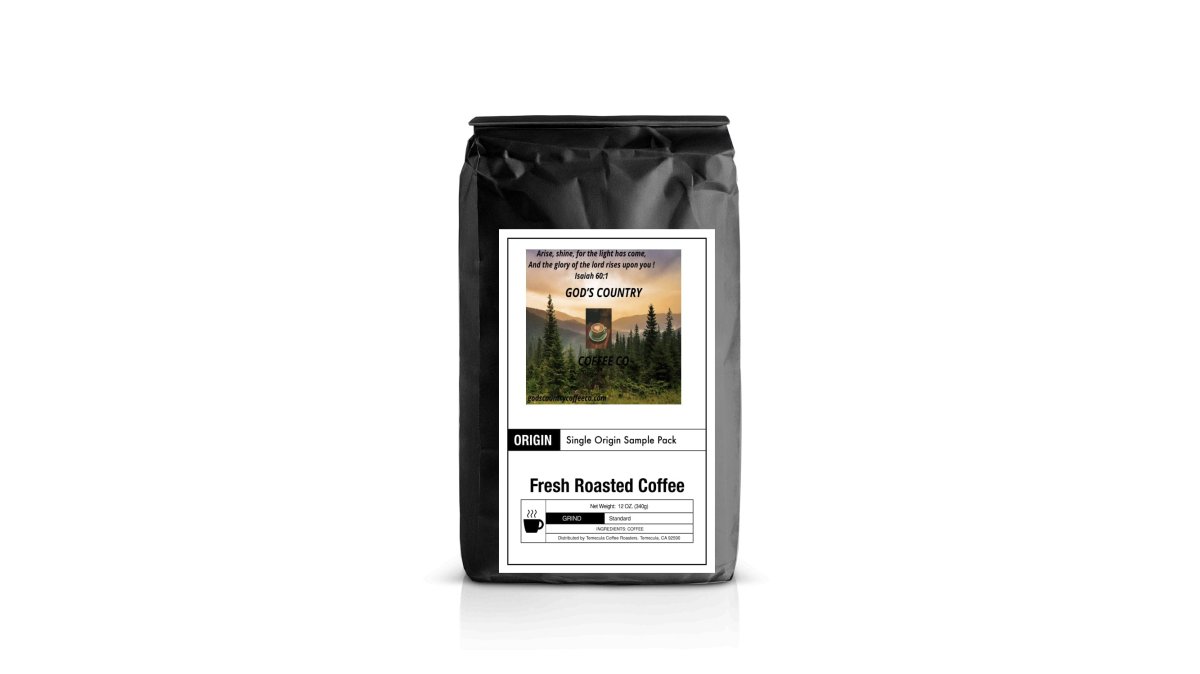
Brazil Santos arrives as a medium roast with elegant, smooth characteristics and cocoa notes.
Colombia features a medium roast with dried orange, berry, and chocolate notes. This coffee comes from smallholder farmers in Medellin, Antioquia, working with volcanic loam soil at 1300-1500 meters. The fully washed, solar-dried process protects the coffee from rain.
Costa Rica offers a medium roast with sweet apple, raisin, and honey characteristics. Sourced from micro farms in Alajuela at 1300-1445 meters, this coffee uses an eco-pulped process and sun drying on volcanic loam.
Ethiopia Natural presents a medium-light roast with milk chocolate, fruity, and caramel notes. From smallholder farmers in the Sidama zone at 1700-1900 meters, this coffee uses a full natural process with hand sorting and raised-bed drying.
Honduras delivers a medium-dark roast with caramel, spice, and brown sugar notes. This coffee comes from 1500 grower-members of Cafe Organics Marcala at 1300-1700 meters.
Single Origin Favorites Sample Pack →
Tanzania rounds out the pack with a medium-light roast featuring pear, floral, jasmine, and strawberry notes.
This sample pack offers an excellent introduction to how origin, altitude, and processing method shape flavor while supporting transparent sourcing relationships.
Specialty Single-Origin Selections
Beyond the sample pack, God's Country Coffee Co. offers individual single-origin options for those ready to commit to a specific flavor profile.
Peru ($23.99) from Cooperativa Agricola de Servicios Norandino showcases what cooperative sourcing can achieve.

Kenya ($23.99) from Othaya in Nyeri County represents East African excellence. At 1700-1890 meters, this coffee develops bright acidity with orange, lemon, floral, and effervescent notes.
Uganda ($23.99) from Sipi in Kapchorwa District offers mild acidity, light body, and floral-chocolate-dark fruit characteristics. At 1500-2500 meters, this coffee's altitude range creates interesting flavor variation.
Guatemala ($23.99) from smallholder farmers in Antigua at 1200-1616 meters delivers dark chocolate, bright fruit, and butterscotch notes. The medium roast and volcanic loam soil create a balanced, approachable cup.
Mexico ($23.99) from Chiapas and Oaxaca features chocolate, cinnamon, and green apple notes. At 900-1000 meters, this medium roast uses fully washed, sun-dried processing.
Papua New Guinea ($23.99) from small agricultural cooperatives in Chimbu Province at 1350 meters offers caramel, honey, and fruit characteristics.
Nicaragua ($23.99) from smallholder farmers at Molino Norte in Matagalpa showcases cocoa, floral, and citrus tones. The 12-14 hour fermentation and patio-and-raised-bed drying are used in this medium roast.
Each single-origin option tells a story about its farming community, processing methods, and environmental context, transparency that distinguishes truly ethically sourced coffee from beans with vague sourcing claims.
Transparency, Traceability, and What to Question
The most important skill when evaluating ethically sourced coffee beans is healthy skepticism about sourcing claims. Not all transparency is equal, and some claims are easier to verify than others.
Demand specific information, not vague promises. "Sustainably sourced" and "responsibly grown" mean nothing without details.
Understand what certifications actually verify. Fair Trade guarantees a minimum price, but not the best price. Rainforest Alliance verifies environmental practices, but certification doesn't mean a farm is perfect.
Recognize the limits of traceability. Even with detailed sourcing information, you can't personally verify farmer working conditions or environmental practices. You're relying on the roaster's relationships and, where applicable, third-party certification.
Question price discrepancies. If one roaster sells Ethiopian coffee at half the price of another, something differs, bean quality, sourcing verification, or roaster margins.
Look for consistency over time. Roasters truly committed to ethical sourcing maintain relationships with the same farms and cooperatives year after year.
Verify claims independently when possible. For Fair Trade and Rainforest Alliance certified coffees, search the certifying organizations' databases to confirm a farm's status.
God's Country Coffee Co. maintains transparent sourcing relationships and provides detailed information about each coffee's origin, processing, and grower. This commitment to traceability separates truly ethically sourced coffee from marketing claims without substance.
Choosing ethically sourced coffee beans means looking beyond certifications and marketing language to understand the real story behind each cup. When you prioritize ethically sourced coffee beans, you're investing in farming communities and sustainable agriculture. Find Your Perfect Roast and explore single-origin options that align with your values.
Frequently Asked Questions
What does ethically sourced coffee mean?
Ethically sourced coffee comes from farms where workers receive fair compensation, work in safe conditions, and farmers maintain sustainable practices. This includes transparency about where beans originate, direct relationships between roasters and growers, and respect for coffee-growing communities. Ethically sourced coffee prioritizes farmer welfare and environmental stewardship alongside quality.
Is organic coffee more ethical than non-organic coffee?
Organic certification and ethical sourcing address different concerns. Organic focuses on farming methods and chemical use, while ethical sourcing emphasizes farmer pay, working conditions, and supply-chain transparency. The best ethically sourced coffee beans often combine both: organic farming practices with fair compensation. A coffee can be organic but not fairly traded, or fairly traded without organic certification. Look for both certifications when possible.
What certifications should I look for when buying ethical coffee?
Key certifications include Fair Trade (ensures minimum prices and worker standards), Rainforest Alliance (environmental and social criteria), UTZ (responsible farming), and Organic (no synthetic pesticides). Direct trade relationships, where roasters work directly with farmer cooperatives, offer transparency without formal certification. Single-origin coffees with named growers and regions provide traceability. Check product labels for multiple certifications and specific origin information.
How can I tell if coffee beans are actually ethically sourced?
Look for specific details: named grower or cooperative, exact region and altitude, processing method, and certification logos. Roasters who invest in ethical sourcing typically share this information prominently. Check roast dates to ensure freshness, which signals active sourcing relationships. Be skeptical of vague claims like 'responsibly sourced' without supporting certifications. Direct contact with the roaster to ask about their sourcing practices is a reliable way to verify claims.
Are ethically sourced coffee beans worth the extra cost?
Ethically sourced coffee typically costs more because farmers receive fair compensation, sustainable practices require investment, and direct trade relationships involve higher oversight. The price difference reflects real improvements in farmer income and environmental practices. For quality-focused coffee drinkers, the combination of ethical practices and superior freshness (roasted to order) justifies the investment. Specialty roasters often offer sample packs to try multiple origins at a lower entry point.